Press release
Publication date: 2026-11-02T14:32
District council and district administrator: Review after one year Review of important resolutions, ongoing projects, and key challenges
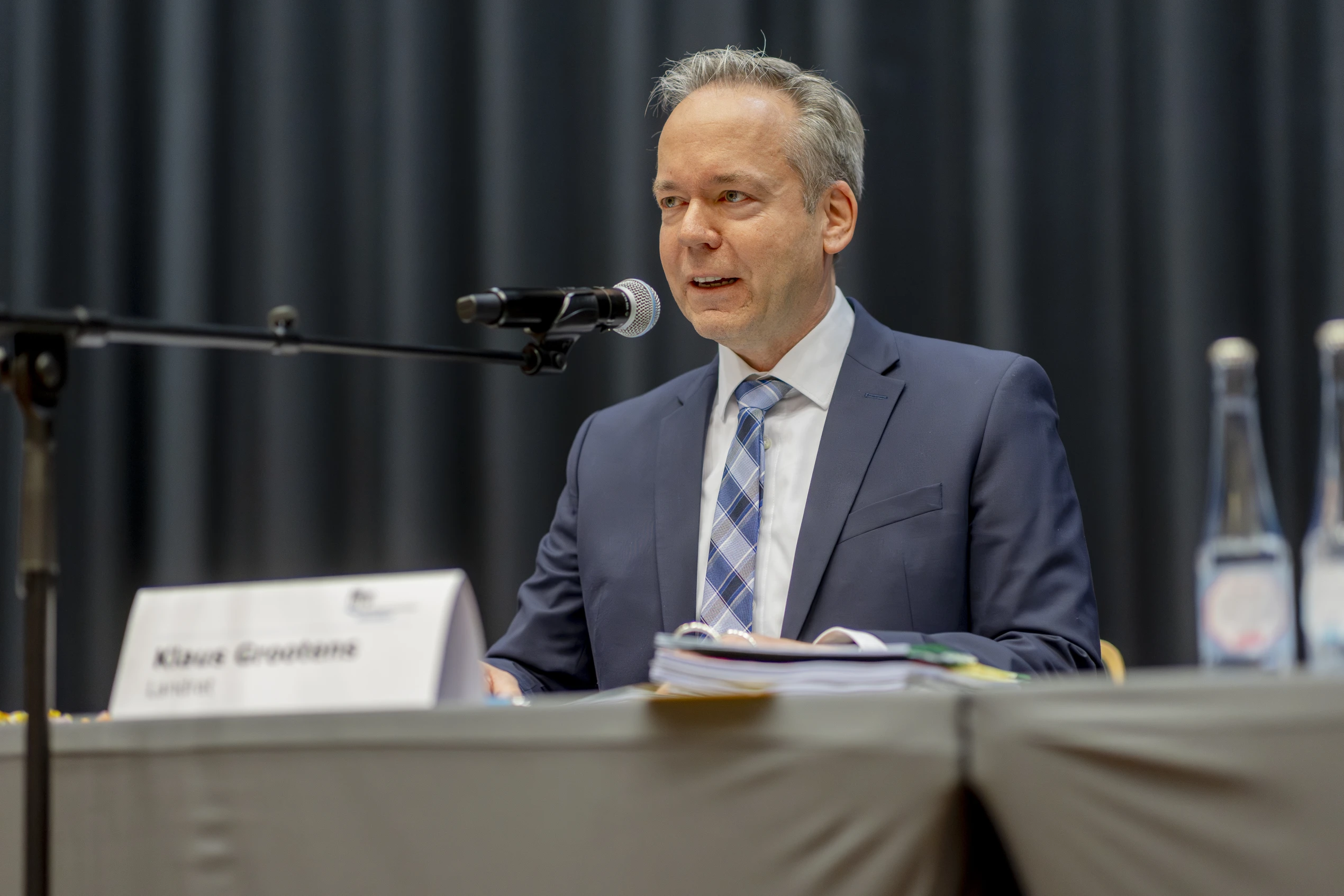
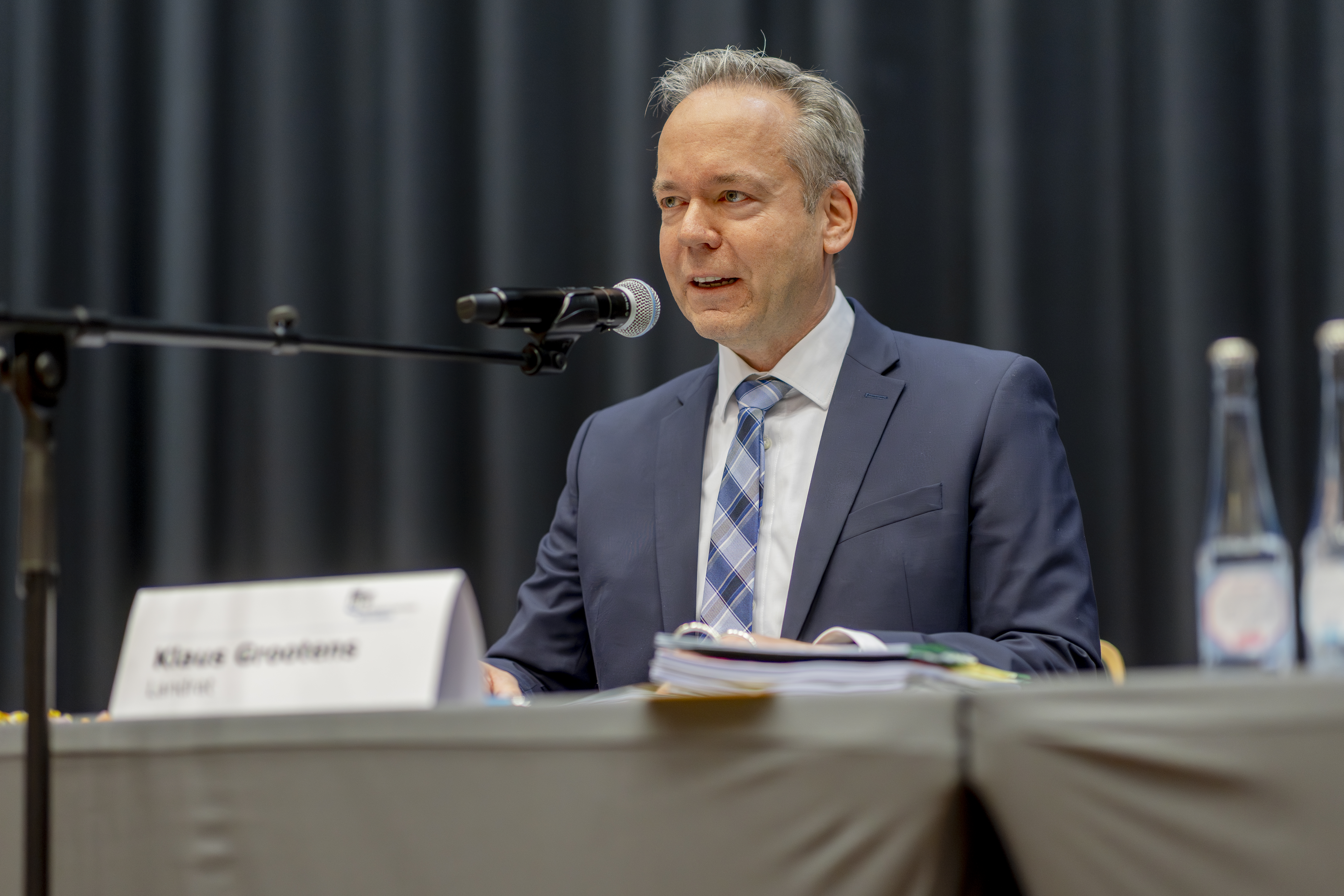
Oberbergischer Kreis. Since November 1, 2025, County Commissioner Klaus Grootens and the newly elected County Council of the Oberbergischer Kreis have made numerous decisions and advanced projects. At the same time, the county and its municipalities face significant challenges, especially regarding economic developments and municipal finances.
For Klaus Grootens, the change in office came with an advantage: he has known the county administration for 25 years. Since 2015, he served as the Deputy County Commissioner and since 2016 as the elected County Director. “Knowing the county administration and its diverse tasks for many years has made my transition to County Commissioner easier. I understood what issues were affecting us and where we needed to focus,” says Grootens.
With the aim of taking responsibility for the Oberbergischer Kreis and its residents, Klaus Grootens took office. A selection of important projects and resolutions by the County Council illustrates what has already been achieved and initiated in the current term.
Safety: Strengthening Emergency Services and Civil Protection
An efficient emergency service and reliable fire and disaster protection are central tasks of the county. Since the beginning of the term, both the financing of the emergency services and the development of the necessary infrastructure have been a focus.
In light of the dispute over emergency service fees, the County Council unanimously passed a resolution. In a special session, it also adopted a new fee schedule for the emergency services. The agreement reached with health insurance providers ensures that no fee notices will be sent directly to patients. Additionally, the purchase of a property in Engelskirchen for the construction of an emergency station was approved. Planning for other necessary emergency stations has also been advanced.
The importance of well-prepared civil protection became evident during the summer due to high temperatures and increased wildfire risk. Emergency responders were especially challenged, providing assistance not only locally but also beyond county borders. Technical equipment was also enhanced. With a new wildfire water tanker, an all-terrain utility vehicle (UTV), and a fire support vehicle, fire departments now have additional resources for combating fires, particularly wildfires and vegetation fires.
Health and Care: Securing Long-Term Provision
Securing medical care in rural areas remains a critical task. The general medical center (MVZ) in Waldbröl launched in October. The Oberbergischer Kreis advanced the planning together with Klinikum Oberberg GmbH to improve local primary care.
The county's medical scholarship program has also successfully started. The funding budget has already been utilized. With the program, the county aims to attract medical talent and ensure long-term care in rural areas.
Additionally, the County Council approved the commissioning for constructing a third extension building for the Academy for Health Economics and Senior Citizens (AGewiS). This will create the conditions to further develop the educational offerings in a field that is particularly important given the demand for skilled workers in care services. “From my long-standing role as managing director of AGewiS, I understand the challenges in care services. We need to strengthen training and bring together stakeholders in the region,” says Grootens. In 2024, the County Commissioner initiated the entrepreneur network from the care sector “P.NetO – Pflegenetzwerk Oberberg.” He continues to serve as a board member of the association, which now has over 30 members.
Economy and Work: Creating Perspectives for the Region
The economic situation poses significant challenges for many businesses. The Oberbergischer Kreis is therefore in dialogue with regional companies and supports them within its means. The economic development department provides advice on qualification opportunities, career development, and questions about business start-ups.
A particular focus is on the career orientation of young people. The training and study fair OBKarriere set a record for visitors this year, offering young people extensive insights into diverse career opportunities. Companies, institutions, as well as colleges and universities provided information about apprenticeships, dual study programs, study opportunities, and voluntary services. In total, training is offered in about 150 different professions in the Oberbergischer Kreis. County Commissioner Grootens emphasizes the importance of early career orientation: “We want to show young people the diverse career perspectives in our region. Even if they initially explore other places for education or studies, they should know that Oberberg has attractive employers and good development opportunities for their future career paths.”
Education: Creating Good Conditions for the Future
The County Council has approved the establishment of a Regional Education Center for vocational colleges in the Oberbergischer Kreis (RBZB). Oberberg is thus the first county in the Cologne administrative district to initiate such an educational center.
The special education school landscape is also set for further development. As the capacity limits of the two special education schools focusing on intellectual development have been exceeded for years, the County Council has decided to use funds from the NRW plan for good infrastructure to establish a third special education school in Bergneustadt.
Another visible result is the new sports hall at the Kaufmännisches Berufskolleg Oberberg in Waldbröl. After around 14 months of construction, it was completed and officially opened this year. It improves spatial conditions for school and physical education. Additionally, the hall is available for local clubs outside of school hours.
Digitalization: Making Information More Accessible
With the relaunch of the website www.obk.de, the Oberbergischer Kreis has updated its digital information offerings. The new website has been online since September. A modern design, revised content, and a stronger focus on the topics relevant to citizens aim to make access to information and services easier.
“Digitalization is already part of our everyday lives. For us as an administration, it is essential to use the possibilities wisely and make access to our services as easy as possible,” says County Commissioner Grootens.
Mobility: Improving Connections in Rural Areas
Good transportation connections are crucial for people and businesses in the Oberbergischer Kreis. The County Council has therefore decided on several measures to further develop public transport.
The express bus SB 56 is planned to extend beyond Much to Bielstein. Additionally, the Oberbergischer Kreis and the Rheinisch-Bergischer Kreis have agreed on a public-law agreement to ensure cross-county traffic services in line operations. The on-demand service monti is also set to continue. The County Council has supported its continuation and initiated a review of the potential expansion of the service area to Reichshof.
A particular challenge remains the regional transportation infrastructure. The announced restrictions on RB 25 and construction work on the Wiehltal Bridge place additional burdens on commuters and businesses. “Mobility remains one of the major challenges in our rural county. The Wiehltal Bridge is a vital transportation artery for commuters, businesses, and the entire region. Even though responsibility lies with the Autobahn GmbH, we are working together with the city of Wiehl to find viable solutions,” emphasizes County Commissioner Grootens.
Finances: Difficult Decisions Ahead
In addition to technical tasks, the county is concerned with the strained financial situation. Rising expenditures and limited financial leeway pose major challenges for both the Oberbergischer Kreis and its 13 municipalities.
With budget consultations for the years 2027 and 2028, important decisions are pending. The focus will be on how to ensure necessary services in the long term, weigh investments wisely, and set clear priorities given limited resources.
Review and Outlook: Developing Oberberg Together
Important resolutions have been passed and numerous projects initiated in the current term. However, many tasks remain challenging—from securing medical care to transportation infrastructure and financial viability for the county.
County Commissioner Klaus Grootens emphasizes: “What makes Oberberg special is not only what we plan and build. It is above all the interaction among people. Volunteering, clubs, neighborhoods, and local engagement in villages make our homeland livable. We want to continue strengthening this cohesion.”