Ticks and mosquitoes in summer
With rising temperatures in spring and early summer, ticks and mosquitoes also come into play. Both are known as vectors and can transmit various pathogens to humans. The Health Department of the Oberbergischer Kreis answers the most important questions on this topic.
This page was translated from German using artificial intelligence. The translation may contain errors or inaccuracies. In case of doubt, the German original version prevails.
Ticks
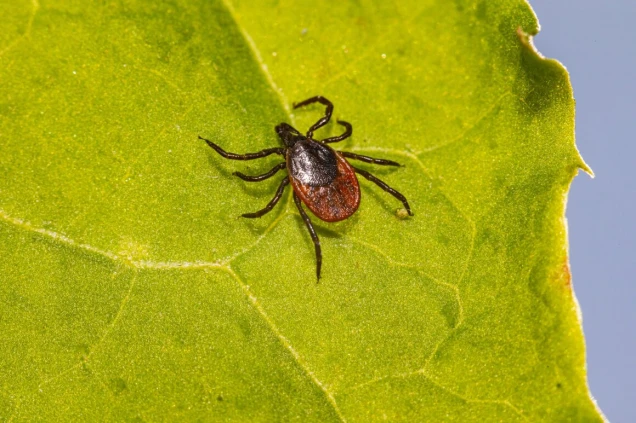
How are pathogens transmitted to humans by ticks or mosquitoes?
Ticks and mosquitoes transmit pathogens through a bite. During this process, they suck blood, which they need for their development and reproduction. The tick or mosquito can absorb pathogens such as viruses, bacteria, or parasites during a blood meal from an infected host. The pathogen often multiplies in the vector. During the next blood meal, the pathogen can be transmitted to a human.
What diseases can be transmitted by ticks?
Significant tick-borne infectious diseases in Germany include Lyme disease and TBE (tick-borne encephalitis). While Lyme disease can theoretically be transmitted anywhere ticks are present, certain regions in Germany are designated as risk areas for TBE.
Is the Oberbergischer Kreis a risk area for TBE?
No, the Oberbergischer Kreis is not classified as a risk area for TBE transmission. A vaccination against TBE is currently only recommended for stays in risk areas. The risk areas in Germany can be found here: RKI - TBE (Tick-borne Encephalitis) - Map of TBE Risk Areas
How can I protect myself from tick bites?
When walking in forests and at forest edges, try to stay on designated paths as much as possible. When you might come into contact with tall grass, shrubs, or undergrowth, wear closed shoes, long trousers, and long-sleeved tops. Pull your socks over your trouser legs. Choose light-colored, plain clothing to make it easier to spot and remove ticks.
Additionally, you can apply tick-repellent products (repellents). Please follow the instructions for use and effectiveness on the packaging.
After spending time outdoors, thoroughly check your entire body for ticks. Ticks prefer protected areas of the skin. Therefore, pay particular attention to the head and hairline, behind the ears, on the neck, under the arms, in the crooks of the elbows, around the navel, in the groin, genital area, and behind the knees.
If you find a tick already attached to your body, you should remove it as quickly as possible: Grasp the feeding tick as close to the skin as possible in the head area using tweezers or a special tick removal tool and pull it out slowly. Be careful not to grab or squeeze the engorged body of the tick, as this could promote the transmission of pathogens. Afterward, disinfect the bite site to prevent inflammation.
Mosquitoes
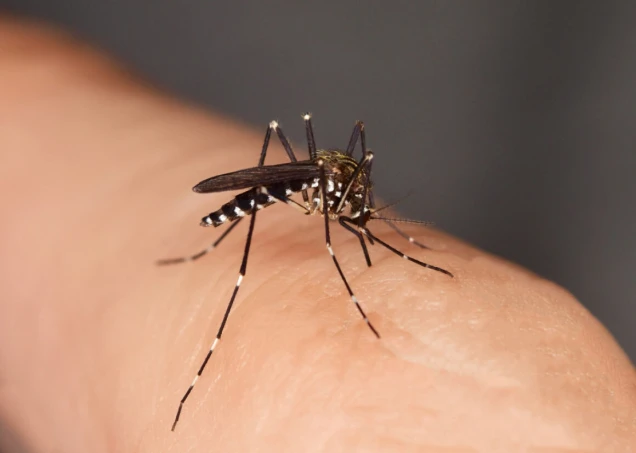
What diseases can be transmitted by mosquitoes?
Diseases transmitted by mosquitoes currently occur in Germany primarily among returning travelers who became infected in a country where the disease is widespread. Examples include malaria, West Nile fever, dengue fever, chikungunya fever, or Zika fever. These diseases predominantly occur in tropical countries but can also appear to a lesser extent in Europe during the summer months.
Can I contract one of these tropical diseases in Germany through a mosquito bite?
Mosquitoes in Germany generally do not transmit pathogens. A mosquito bite usually causes swelling (welt) and itching, and sometimes the bite site may become inflamed.
One disease that can be transmitted to humans by mosquitoes in Germany is West Nile fever. The main carriers of the West Nile virus are the widespread Culex mosquitoes. These mosquitoes can become infected with the West Nile virus through wild birds. The West Nile virus occurs in various regions worldwide. Due to climatic changes, the virus now finds favorable conditions in Germany as well. Since 2019, in addition to cases among travelers returning from abroad, infections have been recorded in which transmission occurred via mosquitoes in Germany. Eastern Germany is primarily affected. Most people infected with the West Nile virus do not develop symptoms. However, flu-like symptoms and, in rare cases, inflammation of the meninges or brain as well as other organs may occur.
What danger does the Asian tiger mosquito pose?
In Germany, the Asian tiger mosquito (Aedes albopictus) is also establishing itself in more and more regions. This mosquito species, originally from Southeast Asia, is active during the day and can transmit pathogens such as the Chikungunya, Dengue, or Zika virus to humans. Such vector transmission has not yet been observed in Germany, but in recent years, it has occurred to a limited extent in Southern Europe. If travelers returning from trips where they were infected with such viruses and have these viruses in their blood are bitten by an Aedes mosquito in Germany, seasonal transmission of these diseases in Germany is conceivable. According to the Robert Koch Institute (RKI), due to climate change, an increase in the risk of Chikungunya virus infections and Dengue virus infections in Germany can be expected.
How can I protect myself from mosquito bites?
The best mosquito protection: wear long clothing, apply anti-mosquito products, install insect screens
The most important measure to prevent mosquito-transmitted infections is protection against mosquito bites. The following measures are suitable for this:
Wear clothing that covers as much skin as possible, such as long-sleeved tops, long pants, and socks. Additional protection can be provided by mosquito-repellent products (repellents) applied to the skin. Clothing can also be made more repellent by treating it with mosquito protection products. Follow the product's instructions for use.
Insect screens on windows and doors or air conditioners can keep mosquitoes out of indoor spaces. Insect nets can also be impregnated with mosquito repellents.
To curb the spread of mosquitoes in your living environment, eliminate or cover mosquito breeding grounds such as open water containers or smaller vessels where water collects. Bird baths should be cleaned and refilled regularly.
Sources: BIÖG (Federal Institute for Public Health), RKI (Robert Koch Institute)
