 copyright: ©momius - stock.adobe.com
Prevention Project "Peer to Peer"
This page was translated from German using artificial intelligence. The translation may contain errors or inaccuracies. In case of doubt, the German original version prevails.
Groups of people who benefit the most from prevention programs often find it difficult or impossible to access these programs ("general prevention dilemma"). The Oberbergischer Kreis aims to focus on these groups and involve them in preventive measures through a peer-to-peer approach (multiplier approach).
The Public Health Office of the Oberbergischer Kreis is currently implementing primary prevention projects with the peer-to-peer approach on topics such as "Infection prevention in daycare centers" and "Movement and healthy nutrition in the community."
Contact
Rabea Riesewieck
Moltkestr. 32
OG01, Raum: I.04
51643 Gummersbach
Sarah Katharina Leisner
Moltkestr. 32
OG01, Raum: I.04
51643 Gummersbach
Kübra Karagöz
Moltkestr. 32
OG01, Raum: I.05
51643 Gummersbach
Delia Koch
Moltkestr. 32
OG01, Raum: I.05
51643 Gummersbach
Infection prevention through a peer-to-peer approach in day-care centres of the Oberbergischer Kreis
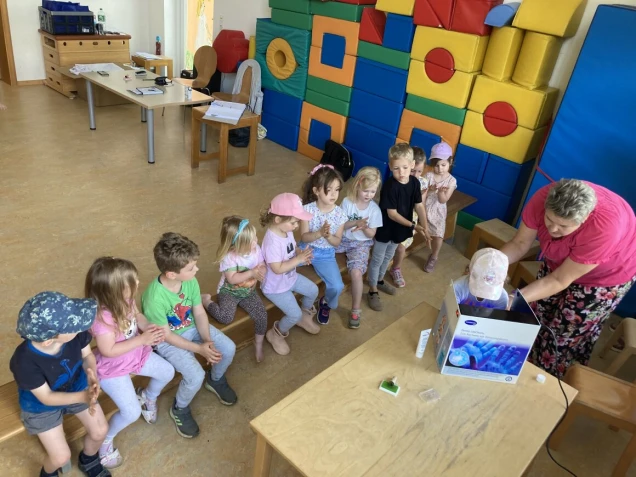
A prevention project on infection hygiene in daycare centres in the Oberbergischer Kreis.
The Health Department of the Oberbergischer Kreis is initiating an innovative prevention project on infection hygiene in daycare centres, becoming the first district in North Rhine-Westphalia to do so.
The aim of the project is to strengthen the resilience of children and facilities against germs and to promote preventive measures for infection avoidance.
Various measures and activities are implemented to increase children's hygiene competence and better prepare facilities for infection control.
Project in the daycare centres of the Oberbergischer Kreis successfully completed
The aim of the project was to prevent the early formation of infection chains and thus outbreaks of notifiable diseases in daycare centres. In addition, the project aims to promote education on vaccination protection among children.
As part of the project, staff in the daycare centres were trained on infection prevention and motivational interviewing techniques. The evaluation shows that the measures not only promoted the health of the children and staff, but also strengthened awareness of hygiene and prevention in the facilities.
The action days were a central element of the project. They gave children the opportunity to learn more about hygiene and infection prevention in a playful way. Handwashing was particularly popular, where children could use a UV lamp to check for themselves how clean their hands were. The success of the health course and the subsequent vaccination recommendations will be evaluated the following year through the school entry examinations and can thus feed into the district's health reporting. In addition, the project improved communication between the childcare facilities and the Health Office. Regular exchange and close cooperation enabled the efficient implementation of important information and recommendations for action.
Due to the positive response, the project will be continued this year and financed from the district's own funds.
Thanks to the financial support and professional advice from the State Health Center NRW (LZG.NRW), this groundbreaking project was made possible.
The funding period ran from 01.09.2023 to 31.03.2025.
The project focuses on daycare centres in selected social areas of
-
Bergneustadt,
-
Gummersbach,
-
Radevormwald and
-
Waldbröl
as its focus.
A holistic approach is pursued.
The facilities and the children are included.
The four-year-old children in the daycare centres are at the centre of attention.
Often, the very people who are meant to benefit from prevention measures do not gain access to these offers. Before the project began, trusted persons or multipliers from the daycare centres were therefore trained on the topic of infection prevention.
These "peers" act as bridge persons between project coordinators, facilities and families. They convey health information credibly and in a targeted manner. The participating peers can identify needs on an equal footing, so that health offers can be adapted to demand.
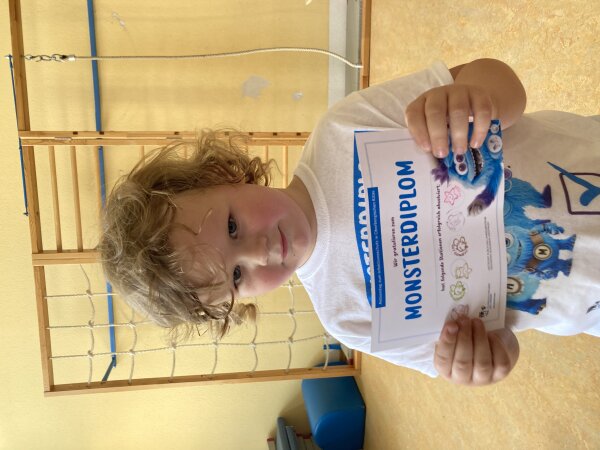
Action days in selected daycare centers are central events of the project. They playfully and interactively promote health literacy among children.
During these events, children move from station to station through the specially designed course for the action days, collecting stamps along the way.
-
Proper hand washing.
-
Coloring a picture.
-
Speaking and communication.
-
Movement and motor skills.
-
Showing vaccination card.
-
Showing examination booklet.
The children are accompanied by monstrous mascots, who have their own superpowers against disease-causing pathogens.
At the end, the children's efforts are rewarded with the awarding of a "Monster Diploma." The children also receive their own information bag with materials and a medical recommendation letter for their parents, as well as a Pixie book, a vaccination calendar, and a coloring picture.
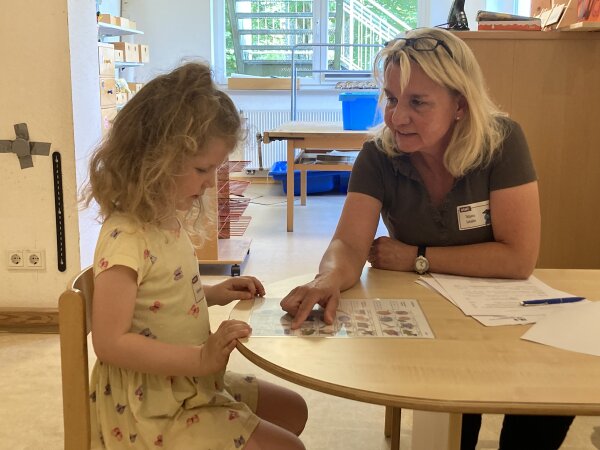
The Pediatric and Youth Medical Service as well as the Infection Control Division of the Public Health Office are supporting the project.
In addition to playful formats for children, there are also individual medical consultations and information sessions for daycare centers on topics such as infectious diseases, vaccine prevention, and outbreak management.
Daycare centers can also utilize materials from the initiative "Hygienetipps-Fuer-Kids.de" by the Institute for Hygiene and Public Health at the University Hospital Bonn.
Through preventive measures, the project is expected to contribute in the long term to a reduction in the number of infections in day-care centres. In addition, important goals are:
-
Building trust:
Strengthening local trust through the involvement of "peers".
-
Self-efficacy:
Promoting self-efficacy among families and day-care centres.
-
Health literacy:
Improving the ability to find, understand and apply health information.
-
Communication structures:
Optimising communication channels between day-care centres and project coordinators.
-
Support in everyday life:
Helping day-care centres deal with infectious diseases on a daily basis.
-
Promoting resilience:
Developing resilience in day-care centres.
The anonymised results of the project are evaluated with the parents' consent. From 2025, comprehensive monitoring will take place through the school entry examinations of pre-school children then aged 5.
Experience from past decades shows that changes in prevention and infection control only become measurable after a time lag and require perseverance.
Download
Presentation on project introduction.
Contact
Kübra Karagöz
Moltkestr. 32
OG01, Raum: I.05
51643 Gummersbach
Peer to Peer is moving the neighbourhood. Growing up healthy in Bergneustadt.
A prevention project focusing on promoting physical activity and nutrition in the municipality.
Through the project, health-promoting structures are to be created at the municipal administrative level and neighbourhood level, which strengthen healthy childhood development and promote equal health opportunities for families with children aged 0 to 10. The focus here is on the topic areas of physical activity promotion and nutrition. The project is led and coordinated by the Health Department of the Oberbergischer Kreis and is implemented as a model in social areas in the district town of Bergneustadt.
Funding and cooperation
The prevention project is funded by the statutory health insurance funds/associations of the state of North Rhine-Westphalia under Section 20a SGB V, as part of their responsibilities for health promotion and prevention in everyday settings.
Thanks to this financial support and the professional guidance provided by the NRW Cooperation Office for Equal Opportunities in Health, this pioneering project for building local structures could be launched.
The funding period runs from March 2024 to February 2027.
Special thanks also go to the town of Bergneustadt, with which a cooperation agreement was concluded to carry out the project.
Since building health-promoting structures, alongside local offers and measures, is a key focus, expanding municipal cooperation is an important element of the project. The health and healthy development of children is influenced by a wide range of different factors, so health promotion must always be understood as a cross-cutting task. In addition to one's own behaviour, health is also influenced, for example, by one's own network, working conditions, financial situation, housing conditions and neighbourhood, as well as local politics.
For this reason, an overarching steering group was established with the heads of various specialist departments, which can discuss and make strategic decisions at the municipal level.
In addition to this steering body, a project working group also operates more at the grassroots level, made up of stakeholders active in Bergneustadt as well as peers who live in Bergneustadt. In this way, the aim is to build the healthiest possible living environment for children.
The project is aimed at families with children aged 0-10 in selected social areas of Bergneustadt.
Often, the very people who are meant to benefit from prevention measures do not gain access to these offers (prevention dilemma). In the course of the project, trusted persons or multipliers are therefore designated and trained as so-called "peers". These peers act as bridge persons between the project coordinator, facilities and families. They convey health information and offers credibly and in a targeted manner. The participating peers can identify needs on an equal footing, so that health offers can be adapted to demand.
-
Promoting healthy growing up
Through open sports and physical activity programmes plus programmes to convey nutrition and health knowledge for and with the people of Bergneustadt ("Peer to Peer")
-
Implementing needs-based health promotion measures and strengthening local trust
Through the involvement of citizens, trusted individuals, institutions and local authorities
-
Creating & strengthening health-promoting structures locally
Through further integration of programmes and network structures plus the expansion of cooperations (strengthening municipal cooperation)
If you are interested in participating in the project, whether as an institution or a private individual, please feel free to get in touch using the contact details below. We look forward to hearing from you!
Contact
Kübra Karagöz
Moltkestr. 32
OG01, Raum: I.05
51643 Gummersbach
