 copyright: JinOdin - stock.adobe.com
Drinking water monitoring
This page was translated from German using artificial intelligence. The translation may contain errors or inaccuracies. In case of doubt, the German original version prevails.
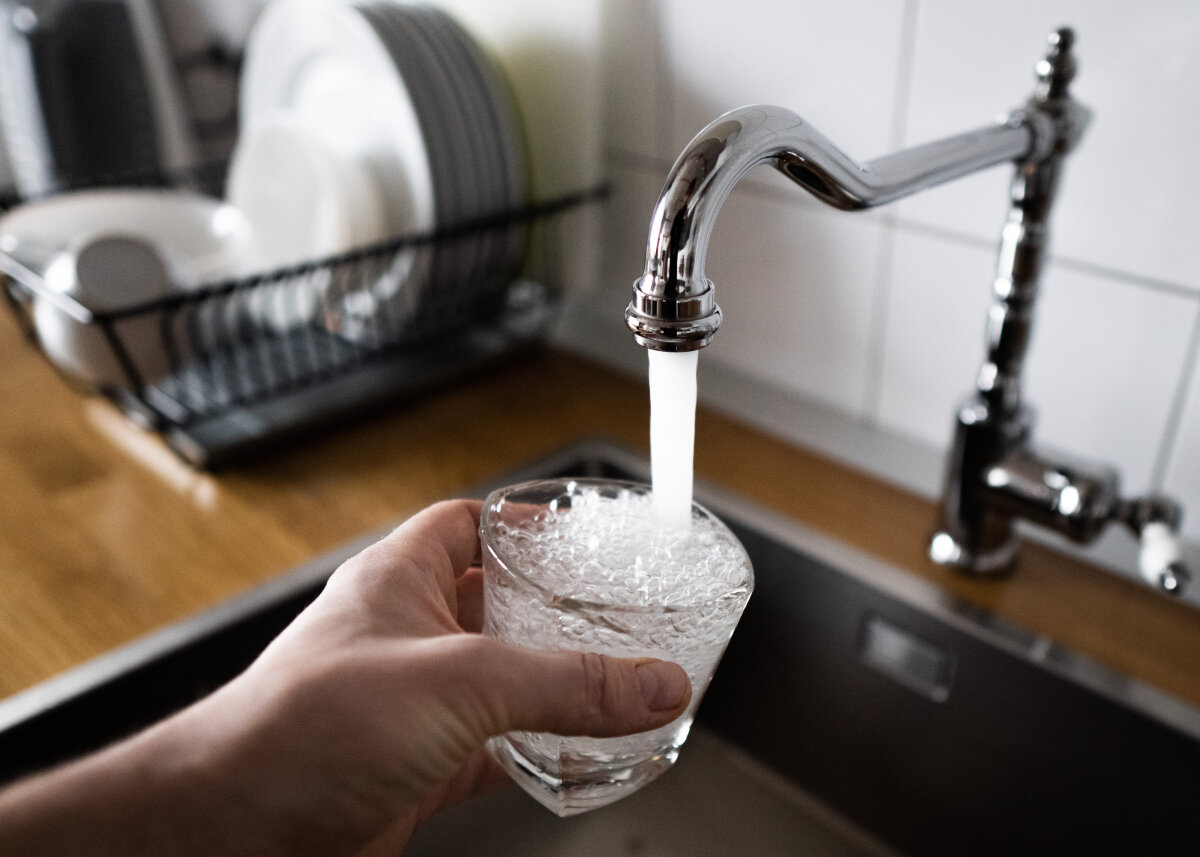
Drinking water is vital for humans and is one of the most closely monitored foods.
Drinking water is not only used for drinking but also for preparing food and beverages, personal hygiene and cleaning, and cleaning objects that come into contact with food or the human body.
In Germany, the water consumption per person is approximately 120 liters per day.
Due to its usage, drinking water is subject to high quality requirements regarding its chemical and microbiological composition.
The basis for the protection and monitoring of drinking water is the "Act for the Prevention and Control of Infectious Diseases in Humans (Infection Protection Act - IfSG)." The quality of drinking water is defined in terms of human health in§ 37 IfSG: "Water for human consumption must be of such quality that no health damage, particularly from pathogens, is to be feared from its consumption or use."
Based on § 38 Paragraph 1 IfSG, the Federal Ministry of Health, with the approval of the Federal Council, has issued the "Ordinance on the Quality of Water for Human Consumption (Drinking Water Ordinance)."
The Drinking Water Ordinance sets requirements for
-
the quality of drinking water,
-
the treatment and disinfection of drinking water,
-
the obligations of the operator and other owners of a water supply system,
-
monitoring.
Most households are connected to central drinking water supply systems. The supply companies regularly monitor the quality of the distributed drinking water.
In the Oberbergischer Kreis, some households and areas have no public water connection and rely on a drinking water well. The health department receives the results of regular drinking water tests from these water supply systems and advises the owners. Private well owners are also subject to the Drinking Water Ordinance and are obligated to register the well if the water is used for drinking, washing, or bathing.
Water withdrawals from groundwater and surface water
The health department grants permits for water withdrawals from groundwater or surface water up to 600,000 m³/a, primarily for drinking water supply.
The issuance of a water law permit or approval requires an application with verifiable documents. This application must show that the requested water quantity is needed (water demand proof) and that the requested water quantity is available in sufficient quantity (availability proof). Furthermore, it must be demonstrated that the water withdrawal does not harm any third party, such as other water users or the animal and plant world. Additionally, it must be proven that the withdrawn water has a quality sufficient for this purpose, considering the regulation on the quality of water for human consumption (Drinking Water Ordinance - TrinkwV).
The health department recommends submitting the application in a timely manner and possibly conducting a preliminary discussion regarding the application documents.
Drinking water heating systems
In the case of renting properties, drinking water is provided as part of a commercial activity. If the drinking water installation includes a large-scale facility for drinking water heating and showers or facilities for water nebulization are present, the entrepreneur or owner of the drinking water installation must test the drinking water for Legionella every three years and inform tenants about the test results.
Legionella are bacteria that occur in small numbers in water. They multiply in warm water at temperatures of 25°C to 50°C. Optimal growth conditions for Legionella are temperatures of 35°C and longer stagnation times in pipelines and water storage tanks.
At water temperatures of 60°C and above, Legionella die off.
A health risk from Legionella occurs through the inhalation of tiny droplets. This is only possible if the water becomes aerosolized, for example, when showering.
An illness caused by Legionella manifests as Pontiac fever, a flu-like illness, or Legionnaires' disease, a severe form of pneumonia.
A large-scale facility for drinking water heating
-
is a hot water storage tank with more than 400 liters capacity
or -
are hot water pipes with more than 3 liters capacity between the drinking water heater and the draw-off point.
Corresponding facilities in single-family and two-family houses are not considered large-scale facilities for drinking water heating.
There is an obligation to test the drinking water for Legionella every 3 years.
Those affected are entrepreneurs or other owners of a drinking water installation,
-
who operate a large-scale drinking water heating system and
-
provide drinking water as part of a rental and
-
have showers or similar facilities where drinking water may become aerosolized.
At least one sample must be taken
-
at the outlet of the hot water storage tank,
-
at the return of the hot water storage tank (circulation)and
-
at a draw-off point farthest from the hot water storage tank, representative of the riser.
If no suitable sample taps are available, they must be properly installed. Samples must be taken in accordance with generally recognized technical rules.
The examination may only be conducted by approved testing laboratories for drinking water. A list can be found at unterwww.lanuv.nrw.de.
The technical action value of 100 Legionella in 100 ml of water must not be exceeded. If the technical action value is exceeded, the health department must be informed. It is advisable to entrust the laboratory with reporting to the health department. This ensures that an immediate notification is made when the technical action value is exceeded.
In the event of exceeding the technical action value, the entrepreneur or owner of the drinking water installation must immediately
-
conduct or have conducted investigations to clarify the cause. These investigations must include an on-site inspection as well as a review of compliance with generally recognized technical rules,
-
prepare or have prepared a risk analysis,
-
implement or have implemented remedial measures that are necessary to protect consumer health in accordance with generally recognized technical rules,
-
inform the health department about the measures taken, and
-
inform the affected consumers about the results of the risk analysis and possible restrictions on the use of drinking water.
The risk analysis must be conducted in accordance with the recommendation of the Federal Environment Agency. These recommendations can be found on the Internet atwww.umweltbundesamt.de
Landlords of multi-family houses must inform their tenants about the results of the Legionella tests in writing or by posting.
Decentralized small waterworks (b-facility)
A b-facility is a water supply system including the associated pipeline network, from which less than 10 cubic meters of drinking water are taken daily or used in the context of a public or commercial activity, without an installation according to § 3 No. 2 Letter a or Letter c Drinking Water Ordinance being present. In contrast to small-scale facilities for self-supply, this water is not used exclusively for self-use.
Self-use refers to the drinking water supply of the homeowner and the persons living in the household community.
A commercial activity is the immediate or indirect, targeted provision of drinking water within the scope of a rental or other independent, regular activity conducted with the intent of generating profit. This also includes agricultural dairy farming operations with their own wells, from which the drinking water is used to rinse the milk lines.
Drinking water that is provided, for example, for washing or cleaning is a direct provision of drinking water. If drinking water is provided or used for food preparation, it is an indirect provision of drinking water.
Water must meet drinking water quality standards not only for drinking, cooking, preparing food and beverages but also for personal care and hygiene, cleaning, and laundry washing in accordance with the Drinking Water Ordinance.
Drinking water must generally be tested microbiologically and physically-chemically once a year. The parameters to be tested are communicated to the operators of the drinking water supply system in writing.
The following notification obligations to the responsible health department exist:
At least four weeks in advance, the following must be reported in writing
-
the construction of a water supply system,
-
the initial commissioning of a water supply system,
-
structural or operational changes to a water supply system,
-
the transfer of ownership or usage rights of a water supply system to another person.
Within three days, the following must be reported
-
the decommissioning of a water supply system.
The operator of a b-facility must immediately notify the health department
-
of limit value violations
-
sensory noticeable changes in the drinking water,
-
extraordinary incidents at the well facility or in the vicinity of the well
A treatment plant must be checked daily for its proper functionality. Additionally, a logbook must be kept in which at least weekly the amount of added treatment substances (consumption) and their concentration after the treatment is recorded.
For questions, the contact persons at the health department are happy to assist.
Small-scale facilities for self-supply (c-facility)
A small-scale facility for self-supply is a water supply system including the associated pipeline network, from which less than 10 cubic meters of drinking water are withdrawn daily for self-use.
Water is typically sourced from borehole wells, shaft wells (no longer state-of-the-art), or spring captures.
Self-use refers to the drinking water supply of the homeowner and the persons living in the household community.
As soon as third parties are regularly and permanently supplied with drinking water, such as neighbors or tenants, extended regulations apply, especially regarding the frequency and scope of drinking water testing.
Water for domestic use must meet drinking water quality requirements not only for drinking, cooking, preparing food and beverages but also for personal care and hygiene, cleaning, and laundry washing.
Drinking water must generally be tested microbiologically once a year and physically-chemically every three years. The parameters to be tested are communicated to the operators of the drinking water supply system in writing.
The following notification obligations to the responsible health department exist:
At least four weeks in advance, the following must be reported in writing
-
the construction of a water supply system,
-
the initial commissioning of a water supply system,
-
structural or operational changes to a water supply system,
-
the transfer of ownership or usage rights of a water supply system to another person.
Within three days, the following must be reported in writing
-
the decommissioning of a water supply system.
The operator of a small-scale facility for self-supply must immediately notify the health department
-
of limit value violations,
-
sensory noticeable changes in the drinking water,
-
extraordinary incidents at the well facility or in the vicinity of the well
A treatment plant must be checked daily for its proper functionality. Additionally, a logbook must be kept in which the amount of added substances and the measured values of the active substance in the drinking water are recorded weekly.
Contact persons by municipalities:
Bergneustadt
Hygiene Control
Peter Wagner
peter.wagner@obk.de
Phone 02261 88-5340
Administrative Processing
Sven Woelki
sven.woelki@obk.de
Phone 02261 88-5311
Engelskirchen
Hygiene Control
Christoph Widmann
christoph.widmann@obk.de
Phone 02261 88-5363
Administrative Processing
Sven Woelki
sven.woelki@obk.de
Phone 02261 88-5311
Gummersbach
Hygiene Control
Peter Wagner
peter.wagner@obk.de
Phone 02261 88-5340
Administrative Processing
Sven Woelki
sven.woelki@obk.de
Phone 02261 88-5311
Hückeswagen
Hygiene Control
Christoph Widmann
christoph.widmann@obk.de
Phone 02261 88-5363
Administrative Processing
Ayşin Demir
aysin.demir@obk.de
Phone 02261 88-5360
Lindlar
Hygiene Control
Jennifer Clemens
jennifer.clemens@obk.de
Phone 02261 88-5374
Administrative Processing
Ayşin Demir
aysin.demir@obk.de
Phone 02261 88-5360
Marienheide
Hygiene Control
Peter Wagner
peter.wagner@obk.de
Phone 02261 88-5340
Administrative Processing
Ayşin Demir
aysin.demir@obk.de
Phone 02261 88-5360
Morsbach
Hygiene Control
Roswitha Schmidt
roswitha.schmidt@obk.de
Phone 02261 88-5354
Administrative Processing
Ayşin Demir
aysin.demir@obk.de
Phone 02261 88-5360
Nümbrecht
Hygiene Control
Christoph Widmann
christoph.widmann@obk.de
Phone 02261 88-5363
Administrative Processing
Sven Woelki
sven.woelki@obk.de
Phone 02261 88-5311
Radevormwald
Hygiene Control
Ivo Wunderlich
ivo.wunderlich@obk.de
Phone 02261 88-5362
Administrative Processing
Sven Woelki
sven.woelki@obk.de
Phone 02261 88-5311
Reichshof
Hygiene Control
Roswitha Schmidt
roswitha.schmidt@obk.de
Phone 02261 88-5354
Administrative Processing
Ayşin Demir
aysin.demir@obk.de
Phone 02261 88-5360
Waldbröl
Hygiene Control
Christoph Widmann
christoph.widmann@obk.de
Phone 02261 88-5363
Administrative Processing
Ayşin Demir
aysin.demir@obk.de
Phone 02261 88-5360
Wiehl
Hygiene Control
Jennifer Clemens
jennifer.clemens@obk.de
Phone 02261 88-5374
Administrative Processing
Sven Woelki
sven.woelki@obk.de
Phone 02261 88-5311
Wipperfürth North
Hygiene Control
Peter Wagner
peter.wagner@obk.de
Phone 02261 88-5340
Administrative Processing
Katrin Scharf
katrin.scharf@obk.de
Phone 02261 88-5322
Wipperfürth South
Hygiene Control
Roswitha Schmidt
roswitha.schmidt@obk.de
Phone 02261 88-5354
Administrative Processing
Katrin Scharf
katrin.scharf@obk.de
Phone 02261 88-5322
Companies for the planning and construction of treatment plants with (DIN-) DVGW certification mark
Note: By entering one of the following numbers in the "Full-text search" field, you can find providers of the corresponding treatment systems:
-
9101 Dosing device
-
9151 Softening system
-
9181 UV system
-
9191 Limescale protection
Specialized companies for drilling and well construction work with DVGW certification according to Worksheet W 120
Note: Select "W120 – Well Construction / Geothermal" for the certificate type
